
Top Tour of Spain
As well as being able to search through a wide selection of excursions and tours to Spain priced to suit all pockets, this travel guide to Spain offers heaps of information about the country. Those of you wishing to travel in Spain can read about its cities and costas, book flights or accommodation, and get to know about the cuisine.
If your dream is to one day live in Spain, you may be more interested in our sections on learning Spanish, buying property, and obtaining legal, financial, and mortgage advice.
Enjoy!
SPAIN TOURS

Spain is not just about glittering, sun-drenched shores and sizzling night-life. It’s a colorful, diverse country, packed to the brim with history, and oozing culture. Get to know more about this fascinating country through excursions and tours in Spain.
Whether you require affordable half- and one-day sightseeing trips, an economic multi-day tour of Spain encompassing several cities of Spain, or wish to splash out and treat yourself to luxury/privatised Spanish tours, you’ll find something to suit your needs amongst our super selection … be it sightseeing, cycling, gastronomic … whatever!
Learn more about …
2-BED HOLIDAY APARTMENT BENIDORM

With its fabulous beaches and ideal climate, what better way of enjoying a stay there than by renting this spacious, south-facing, 2-bedroomed apartment? Well-positioned for Benidorm’s Levante Beach and town centre, it’s fully furnished and equipped, with communal swimming pool, and offers breathtaking views of both the Levante and Poniente Beaches.
Learn more about …
AIR TRAVEL TO SPAIN

Holiday-makers who book our excursions and tours of Spain come from all over the World. For this reason, our tours start within Spain itself. With tourism being one of the country’s main industries, you should have no trouble securing suitable flights to Spain. But, to help you along, we offer a powerful and flexible flight search engine, which can scour over 600 airlines to unearth the best flight for you.
You’ll also discover information about the main airports in Spain, as well as help with airport transfers, so that your journey from the airport to your final destination is as hassle-free as possible.
Learn more about …
SPAIN HOLIDAY ACCOMMODATION
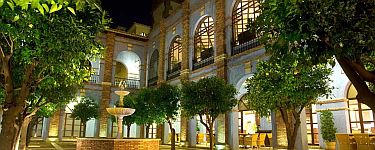
Those of you booking any of our multi-day Spain tours will have accommodation included during the trip. But, you may only want a partial or full-day tour of Spain, or perhaps your multi-day tour is just a small part of your Spanish holiday? If this is the case, you’ll wish to know what your options are as far as holiday accommodation is concerned.
Basically, you have three main choices: hotels, hostels in Spain, or the famous Spanish paradors. You can learn more about all of them on this site, search for the best prices, and benefit from lower internet rates by booking online.
Learn more about …
TOP TOUR OF SPAIN – HOLIDAY VILLAS IN SPAIN

Maybe you’ve had enough of hotel life … the endless queueing for meals, the early-morning rush to get a sun lounger by the pool, the constant milling of people. Perhaps the time has come for you to consider villa rentals in Spain?
Villas to rent in Spain can work out to be surprisingly affordable, especially if you get together with family and friends. And, whether you seek luxury or economy, a quick city break, or a couple of weeks lounging by a sun-kissed Spanish beach, you’ll discover something to suit your needs with our selection of over 3,000 holiday villas in Spain.
Learn more about …
TOP TOUR OF SPAIN – CAR HIRE SPAIN

There’s so much to see and do in Spain and perhaps this is why more holiday-makers hire cars in Spain than in almost any other country.
If you are planning to rent a car, you’d be wise to research prices well in advance, as costs can vary quite a bit. Booking your car hire Spain once you arrive at your destination is definitely not the way to get the best deals.
Learn more about …
TOP TOUR OF SPAIN – TRAVEL GUIDE TO SPAIN

Whether you’re planning to holiday in Spain or live in Spain, some background information about the country won’t go amiss. You’ll discover plenty of interesting articles about tradtional Spanish food, culture and history, easy Spanish recipes, and an introduction to the Spanish language.
You’ll also find helpful information regarding Spain’s cities, including a wide selection of cheap hotels for, as with any European capital city, accommodation can be extremely expensive.
Learn more about …